Key Takeaways
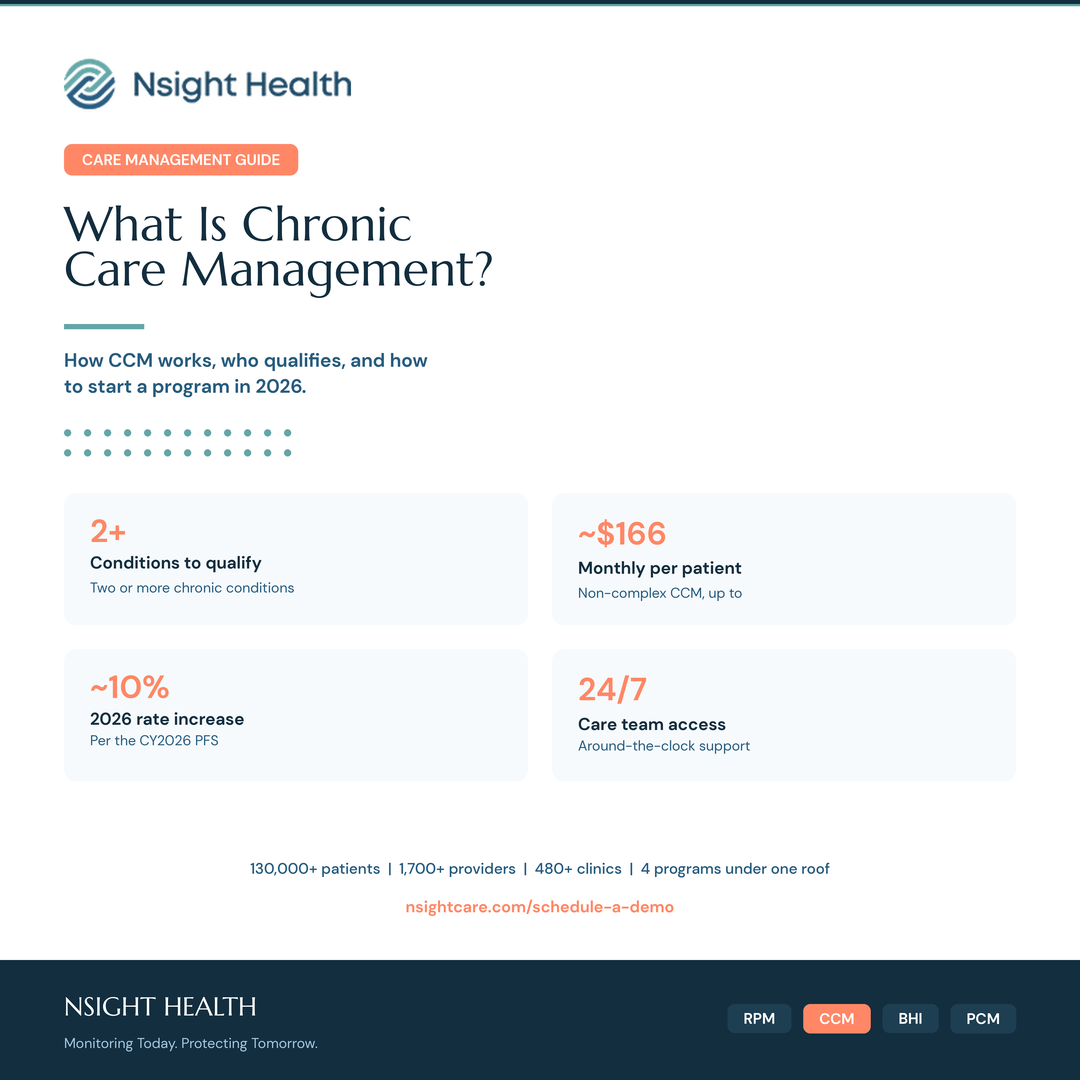
- Chronic care management (CCM) is a Medicare Part B program that reimburses providers for the ongoing, non-face-to-face work of coordinating care for patients with two or more chronic conditions expected to last at least 12 months.
- CCM is built around a comprehensive care plan, monthly clinical staff time, and around-the-clock access to a care team, all designed to keep patients healthier between office visits.
- Any two qualifying chronic conditions can make a patient eligible, including common diagnoses such as diabetes, hypertension, heart disease, COPD, chronic kidney disease, and arthritis.
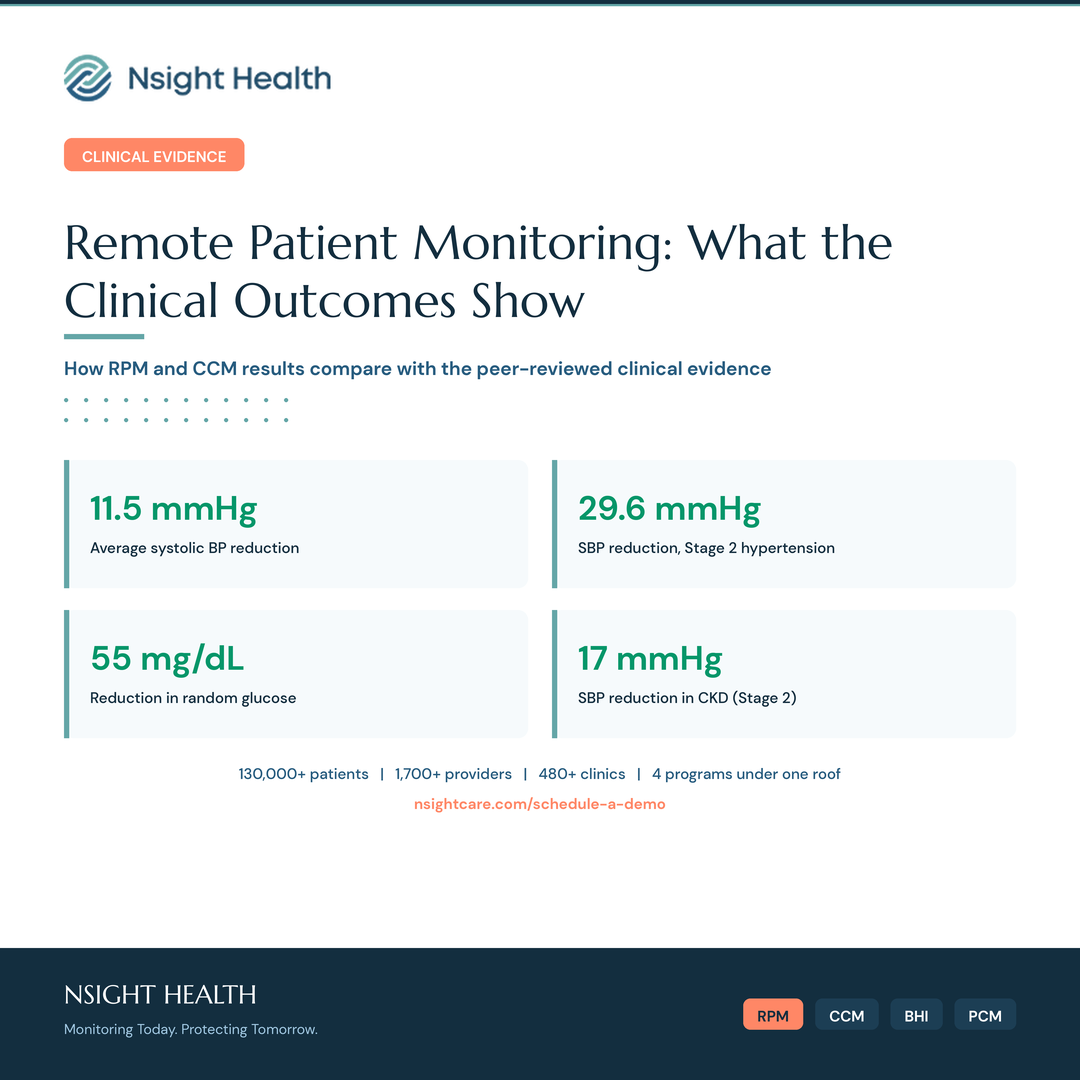
- Real-world outcomes from Nsight Health's clinically managed program show meaningful clinical improvement, including an average systolic blood pressure reduction of 11.5 mmHg in hypertension and approximately 29.6 mmHg in Stage 2 hypertension.
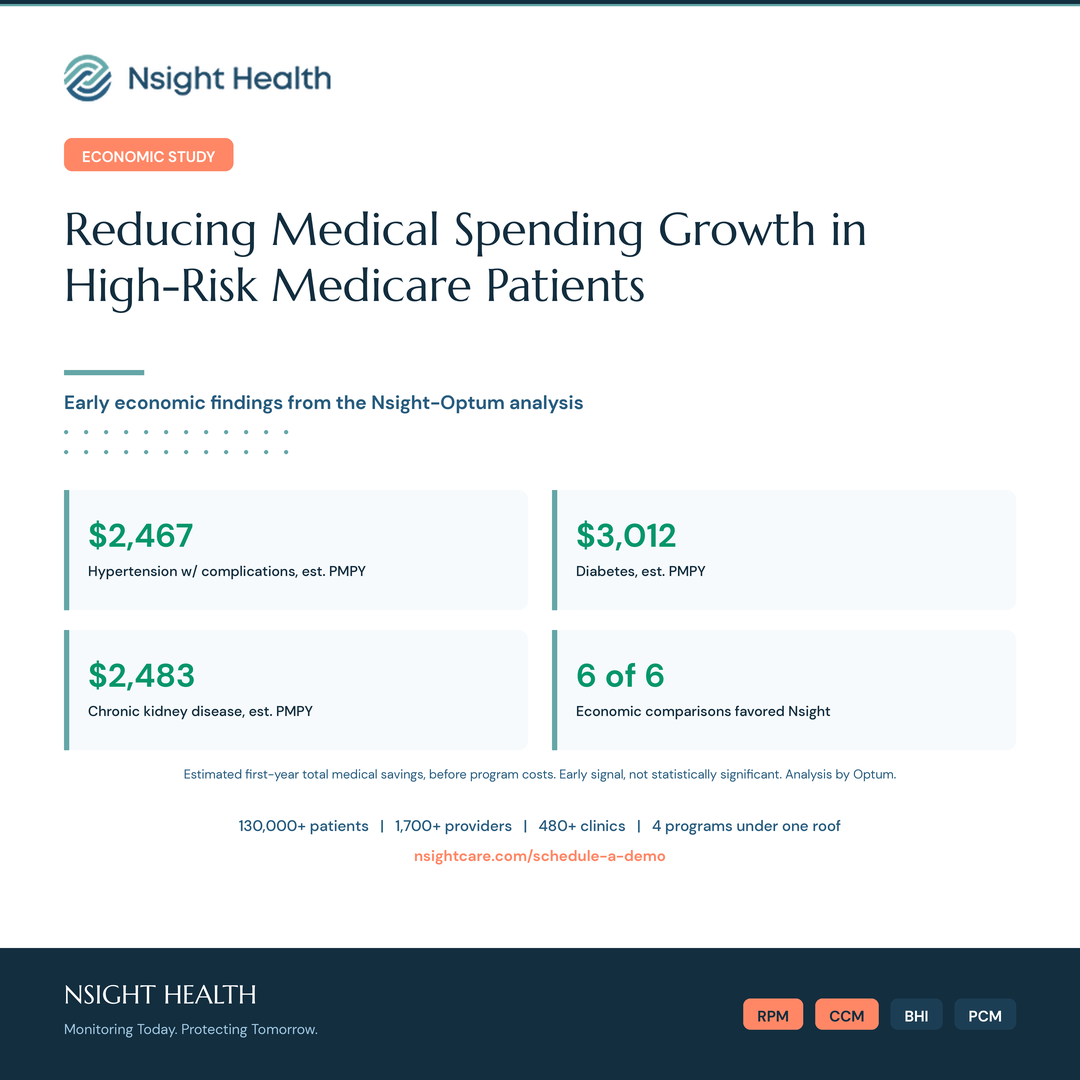
- An Optum analysis commissioned by Nsight Health found directionally favorable first-year medical savings of approximately $2,500 to $3,000 per member per year across high-risk Medicare cohorts, an early economic signal that did not reach conventional statistical significance.
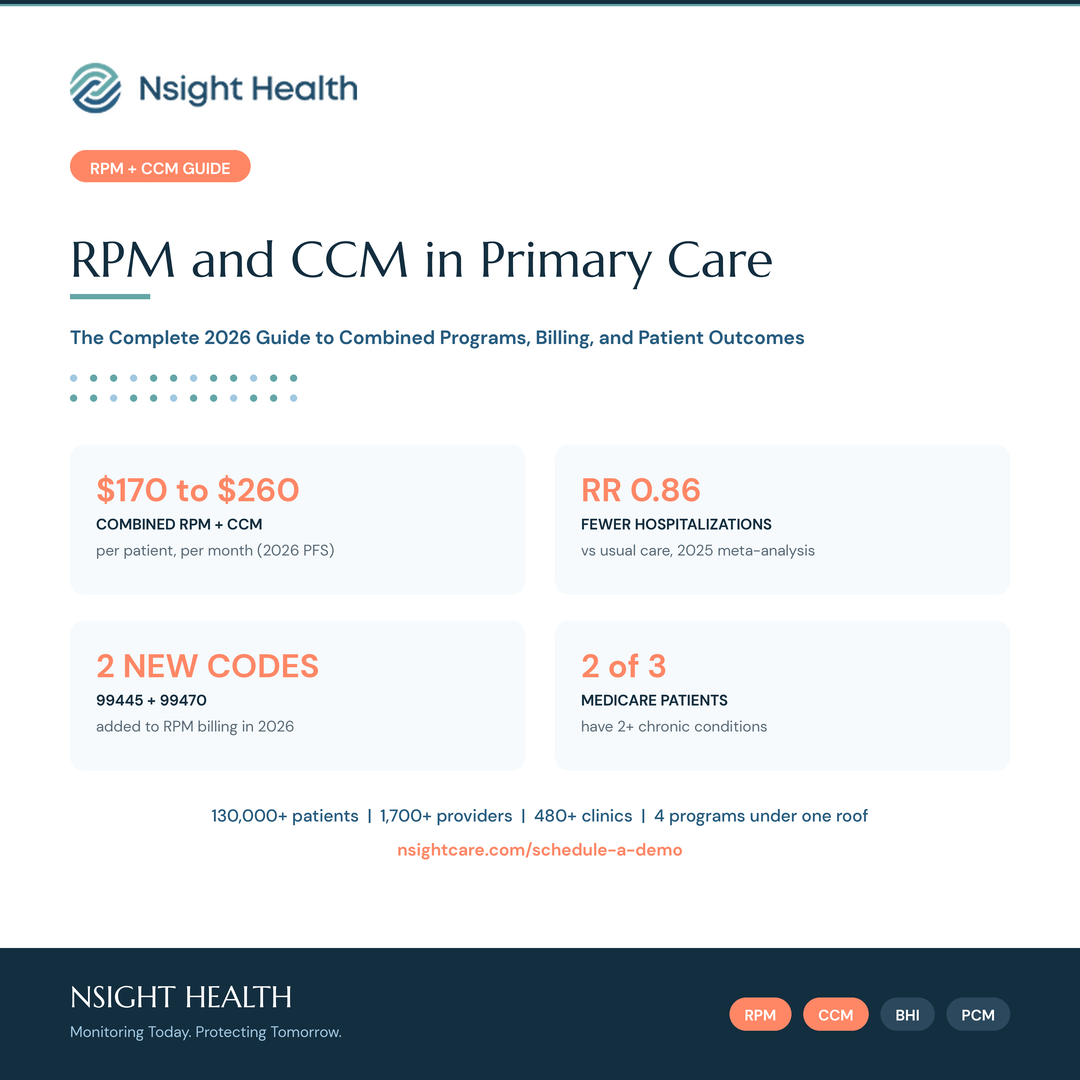
- For practices, CCM strengthens care coordination and patient engagement while creating a recurring, Medicare-reimbursed revenue stream that grew approximately 10 percent under the 2026 Physician Fee Schedule.
Chronic care management is one of the most impactful and underused services in modern primary care. If you have ever wondered what chronic care management actually is, how it works, who qualifies, what the evidence shows, and why so many practices are building programs around it, this guide answers those questions in depth for both patients and providers. More than six in ten American adults live with a chronic disease, and four in ten live with two or more, which is exactly the population this Medicare program was designed to support.
This guide covers the full picture: what chronic care management means, how the monthly care model works, which conditions and patients qualify, the clinical evidence behind the model, the economic case for payers, how reimbursement works under the 2026 fee schedule, and how to choose between building a program in-house and partnering with a fully managed provider. Wherever rates or outcomes appear, they are drawn from verified 2026 sources and Nsight Health's own clinical and economic evidence.
What Is Chronic Care Management?
Chronic care management is a Medicare Part B service that reimburses providers for the ongoing, non-face-to-face work of coordinating care for patients with multiple chronic conditions. Introduced by the Centers for Medicare and Medicaid Services (CMS) in 2015, CCM recognizes that the most important care for a patient with diabetes, heart disease, or COPD often happens between appointments, not during them.
At its core, chronic care management gives a patient a dedicated point of contact and a written plan that ties together every part of their care. A care team member checks in each month, reviews medications, helps schedule appointments and tests, coordinates with specialists, and connects patients to community resources. The goal is straightforward: keep small problems from becoming hospitalizations, and help patients take an active role in managing conditions that will be with them for years.
Unlike a one-time visit, CCM is a continuous, longitudinal service. It is delivered remotely, supported by a certified electronic health record, and grounded in a comprehensive care plan that is created with the patient and revised as their needs change. It is the connective tissue between visits that fragmented healthcare so often lacks.
A Brief History of Chronic Care Management
Chronic care management became a separately billable Medicare service in 2015, when CMS introduced CPT 99490 to pay providers for the non-face-to-face coordination that had long gone unreimbursed. The benefit reflected a growing recognition that chronic disease drives the majority of Medicare spending and that better coordination between visits could improve outcomes.
The program has expanded steadily since. CMS added complex CCM codes in 2017 for patients requiring more intensive, higher-complexity management. Add-on codes followed to capture additional clinical staff and physician time, and in 2022 the agency introduced principal care management to support focused management of a single serious condition. Most recently, the 2026 Physician Fee Schedule Final Rule increased care management reimbursement by approximately 10 percent and changed how Federally Qualified Health Centers and Rural Health Clinics bill these services.
The throughline across a decade of rulemaking is clear: CMS continues to invest in chronic care management as a cornerstone of the shift from volume-based to value-based care. For practices, that sustained federal commitment makes CCM one of the more durable and strategically important services to build a program around.
How Does Chronic Care Management Work?
A chronic care management program follows a consistent monthly rhythm. Once a patient is identified as eligible and consents to enroll, care begins with an initiating visit and the creation of a personalized care plan. From there, the program runs on recurring, month-over-month coordination.
The comprehensive care plan
Every CCM patient has an electronic care plan that lists their conditions, medications, providers, goals, and the services they need. It is shared with the patient and caregivers and updated as health status changes. The care plan is the clinical foundation of the entire program, and all monthly coordination flows from it.
Monthly care coordination
Clinical staff working under the general supervision of the billing provider deliver the required monthly care time, beginning at a minimum of 20 minutes for non-complex CCM. This time covers medication review, follow-up on care goals, gap closure, appointment and test scheduling, and coordination with the rest of the care team.
Around-the-clock access
Patients have 24/7 access to a care team member for urgent needs, so they are not left waiting until the next appointment when something changes. For patients who live alone or manage several conditions, this continuity is one of the most valuable features of the program.
Care coordination across providers
The care team manages transitions between care settings, reconciles medications, and keeps specialists, primary care, and caregivers working from a single shared plan. CMS requires at least one interactive communication with the patient each calendar month as part of the service. Practices should follow current CMS guidance on documentation requirements.
What Services Are Included in Chronic Care Management?
CCM is more than a monthly phone call. A complete program bundles a defined set of services that together create a continuous safety net around the patient:
- Structured care planning. Creation, implementation, revision, and monitoring of a comprehensive, patient-centered care plan.
- Medication management. Regular review and reconciliation to reduce interactions, duplication, and adherence problems.
- Care coordination. Communication and engagement with the patient, caregivers, and the full care team across settings.
- Transitional support. Help moving safely between care settings, such as after a hospital discharge.
- Preventive and self-management support. Reinforcement of health goals, preventive services, and self-care between visits.
- 24/7 access and continuity. Around-the-clock access to a care team member and a consistent point of contact month to month.
What to Expect as a Chronic Care Management Patient
For patients, chronic care management is designed to feel less like a clinical program and more like having a knowledgeable partner in your corner. Here is what the experience typically looks like from enrollment forward:
- An invitation and consent. Your provider or care team explains the program, what it includes, and the small monthly cost, then asks for your consent to enroll. You can decline or unenroll at any time without affecting your other Medicare benefits.
- Your personalized care plan. The care team builds a written plan covering your conditions, medications, goals, and the providers involved in your care. You receive a copy and can refer to it anytime.
- Monthly check-ins. A care team member reaches out each month to see how you are doing, review medications, help schedule appointments and tests, and address any concerns before they become urgent.
- Support whenever you need it. You have around-the-clock access to a care team member for urgent questions, so you are never left waiting until the next office visit.
- A plan that evolves with you. As your health changes, your care plan is updated, keeping every provider on your team aligned.
The result is fewer gaps, fewer surprises, and a clearer path through what can otherwise feel like a fragmented system.
What Conditions Qualify for Chronic Care Management?
To qualify for chronic care management, a patient must have two or more chronic conditions that are expected to last at least 12 months, or until the end of life, and that place the patient at significant risk of death, acute exacerbation, decompensation, or functional decline. CMS does not publish a fixed, closed list of qualifying diagnoses. Any two conditions that meet those criteria can qualify a patient.
That said, the conditions most commonly managed under CCM reflect the most prevalent chronic diseases in the United States. The table below shows representative qualifying conditions by category.
| Category | Common Qualifying Conditions |
|---|---|
| Cardiovascular | Hypertension, heart failure, coronary artery disease, atrial fibrillation |
| Metabolic and endocrine | Diabetes, obesity, thyroid disorders |
| Respiratory | COPD, asthma |
| Renal | Chronic kidney disease |
| Neurological and behavioral | Alzheimer's disease and related dementia, depression, anxiety |
| Musculoskeletal and other | Arthritis, osteoporosis, cancer |
The five most prevalent chronic conditions in the country, heart disease, cancer, diabetes, obesity, and hypertension, account for a large share of CCM enrollment, but the program is intentionally broad. If a patient is managing two or more long-term conditions that require coordinated attention, they are likely a candidate.
Who Is Eligible for CCM?
Eligibility has two sides: the patient and the practice. On the patient side, the requirements are clear:
- Enrollment in Medicare Part B, or dual eligibility for Medicare and Medicaid.
- Two or more chronic conditions expected to last at least 12 months or until the end of life.
- Conditions that place the patient at significant risk of decline, exacerbation, or death.
- Documented patient consent, given verbally or in writing, before services begin.
- An initiating visit for new patients, or for patients not seen within the prior 12 months, which can occur during an evaluation and management visit, an Annual Wellness Visit, or an Initial Preventive Physical Examination.
Patients typically pay a 20 percent coinsurance under Medicare Part B, often approximately $8 to $15 per month, which is frequently covered in full for those with supplemental coverage such as a Medigap plan or Medicaid. Only one provider may bill CCM for a given patient in any calendar month, so coordination matters.
On the practice side, eligible billing providers include physicians and qualified healthcare professionals such as nurse practitioners and physician assistants. Practices need a certified electronic health record, the staffing to deliver and document monthly care time, and the workflows to identify and enroll eligible patients. That last requirement is where many practices stall, and it is exactly the gap a managed partner is built to close.
What Are the Requirements for Chronic Care Management?
Beyond patient eligibility, CMS sets specific program requirements that must be met and documented for every billed month:
- Initiating visit. Required for new patients or those not seen within the prior 12 months.
- Documented consent. Verbal or written consent obtained before services begin, including acknowledgment that cost-sharing applies and that only one provider can bill CCM per month.
- Comprehensive electronic care plan. Created, shared with the patient, and maintained in a certified EHR.
- Monthly care time. Delivery and precise documentation of the required clinical staff or provider time each calendar month.
- 24/7 access. Around-the-clock access to care and continuity with a designated care team member.
- Ongoing engagement. At least one interactive communication with the patient each calendar month, documented per current CMS guidance.
Time does not carry over between months. Each calendar month starts fresh, which is why disciplined, auditable time tracking is essential to a compliant program.
The Clinical Evidence Behind Chronic Care Management
The strongest case for chronic care management is clinical. A substantial body of peer-reviewed research shows that pairing remote monitoring with longitudinal care management improves outcomes across the most common chronic diseases. Nsight Health's clinically managed program, which combines CCM with remote patient monitoring, has produced real-world results consistent with, and in several cases at the upper range of, the published literature.
The table below compares published clinical findings with real-world outcomes from Nsight Health's program, as documented in the Nsight Health Clinical Evidence White Paper.
| Condition | Published Clinical Impact | Nsight Health Real-World Results |
|---|---|---|
| Hypertension | Systolic BP reduction of 4 to 11 mmHg; improved BP control | 11.5 mmHg systolic reduction overall; approximately 29.6 mmHg in Stage 2 hypertension |
| Diabetes | HbA1c reductions of 0.4 to 1.5 percent | 55 mg/dL reduction in random glucose readings |
| Chronic kidney disease | Improved BP control slows progression and may delay dialysis | 6.5 mmHg reduction in Stage 1 hypertension; 17 mmHg in Stage 2 hypertension |
| Heart failure | Mortality reduced 15 to 20 percent; hospitalization reduced 10 to 30 percent | Greater than 50 percent reduction* in hospital admissions and approximately 52 to 56 percent mortality reduction* (legacy program data, see note) |
| COPD | Hospitalizations reduced 30 to 60 percent; ER visits reduced 25 to 40 percent in high-risk patients | Outcomes study in progress |
Hypertension is one of the most responsive conditions to this model, and reductions in systolic blood pressure of roughly 10 mmHg are associated with meaningful decreases in cardiovascular events. Nsight's overall reduction of 11.5 mmHg sits at the upper range of reported outcomes, and the larger reduction in Stage 2 hypertension shows the program's impact on the highest-risk patients, where the clinical and economic stakes are greatest.
Note on heart failure data: The greater than 50 percent reduction* in hospital admissions and the approximately 52 to 56 percent mortality reduction* reflect outcomes reported by a legacy structured heart failure RPM program upon which Nsight Health's program was modeled. These figures are not derived from Nsight Health proprietary outcomes data, and Nsight Health has not yet generated independent heart failure outcomes data. The Nsight outcomes above reflect real-world program data, are not peer-reviewed, are provided for informational purposes only, are not medical advice, and individual results vary.
The Clinical and Operational Benefits of Chronic Care Management
Patients with multiple chronic conditions often juggle several specialists, long medication lists, and competing instructions. Without coordination, gaps appear, and those gaps lead to avoidable emergency visits and hospitalizations. A well-run CCM program changes that.
Clinical benefits include:
- Better disease management between visits. Monthly contact catches warning signs early, when they can still be managed in the community rather than the emergency department.
- Safer medication use. Regular medication review reduces the risk of dangerous interactions and adherence problems, a leading cause of preventable harm in older adults.
- Stronger care coordination. A single care team keeps primary care, specialists, and caregivers working from the same plan, reducing duplicate tests and conflicting treatment.
- Higher patient engagement. Patients who hear from their care team every month are more activated in their own care, which is associated with better long-term outcomes.
- Continuity for vulnerable patients. Around-the-clock access and consistent follow-up are especially valuable for patients who live alone or have limited support.
Operational benefits for practices include:
- Extending care capacity without expanding in-office visit volume.
- Reducing no-shows and last-minute scheduling chaos through proactive outreach.
- Surfacing care gaps and preventive needs before they escalate.
- Improving performance on value-based care and quality measures tied to chronic disease.
- Building a predictable, recurring service line that supports the practice financially.
The catch is that running CCM in-house requires dedicated clinical staff, disciplined time tracking, and ongoing enrollment management. For many practices, the administrative weight outweighs the benefit unless they bring in a partner to carry it.
The Economic Case for Chronic Care Management
For payers, ACOs, and Medicare risk-bearing organizations, the central question is not simply whether chronic disease can be managed, but whether a model can change the cost trajectory of high-risk patients whose spending is already elevated. To evaluate this, Nsight Health commissioned Optum to conduct a retrospective matched cohort, difference-in-difference analysis comparing Nsight patients with matched non-Nsight controls in a Medicare fee-for-service population age 65 and older.
Across three high-cost cohorts, hypertension with complications, diabetes, and chronic kidney disease, Nsight patients showed lower growth in total medical spending during the first year of care than matched controls. The estimated first-year savings are summarized below.
| Cohort | Est. Total Medical Savings (PMPY) | Condition-Specific Savings (PMPY) |
|---|---|---|
| Hypertension with complications | approximately $2,467 | approximately $1,314 |
| Diabetes | approximately $3,012 | approximately $1,741 |
| Chronic kidney disease | approximately $2,483 | approximately $1,604 |
All six economic comparisons, three for total medical spending and three condition-specific, favored Nsight, with the diabetes and chronic kidney disease condition-specific findings approaching conventional statistical significance. The consistency of the signal across multiple disease states is notable, especially given the short 11- to 12-month evaluation window, when program costs are typically incurred early and the largest savings tend to accrue later.
Important context: These results represent an early but meaningful economic signal, not definitive proof of savings. The findings did not reach conventional thresholds for statistical significance. The savings figures reflect gross medical spending before program costs, exclude RPM and CCM reimbursement, and do not establish first-year net return on investment. The analysis evaluated Medicare fee-for-service patients age 65 and older and is most applicable to Medicare and Medicare-risk populations. Source: Optum, Inc. analysis dated May 1, 2026.
Chronic Care Management and Value-Based Care
Chronic care management sits at the center of the healthcare system's shift from fee-for-service to value-based care. As payment increasingly rewards outcomes and total cost of care rather than visit volume, the between-visit coordination that CCM formalizes becomes a strategic asset rather than an administrative afterthought.
For accountable care organizations, Medicare Advantage plans, and other risk-bearing organizations, CCM supports the core objectives of value-based contracts:
- Reducing avoidable utilization. Proactive monitoring and coordination aim to prevent the emergency visits and hospitalizations that drive total cost of care.
- Improving quality measures. Consistent management of chronic conditions supports performance on the quality metrics that determine shared-savings and risk-adjusted payments.
- Identifying high-risk patients early. Structured care management helps surface rising-risk patients before their costs escalate.
- Changing the cost trajectory. As the Nsight-Optum analysis suggests, longitudinal management of complex patients may slow medical spending growth over time, the central goal of value-based care.
In a value-based world, the organizations that succeed are those that intervene earlier and more consistently. Chronic care management is one of the most direct mechanisms for doing exactly that, which is why it features so prominently in modern population health strategy.
How Chronic Care Management Is Reimbursed
Medicare reimburses chronic care management under the Physician Fee Schedule using a set of time-based CPT codes. The 2026 Physician Fee Schedule Final Rule increased care management reimbursement by approximately 10 percent, making this one of the most favorable environments for CCM since the program began.
The table below summarizes the primary 2026 CCM codes with approximate national average reimbursement. For a complete breakdown of requirements, documentation, and revenue stacking, see our 2026 CCM CPT codes and reimbursement guide.
| CPT Code | Description | Approx. 2026 Rate |
|---|---|---|
| 99490 | First 20 minutes of clinical staff time, non-complex CCM | approximately $66 |
| 99439 | Each additional 20 minutes of clinical staff time, up to twice per month | approximately $50 |
| 99491 | First 30 minutes provided personally by a physician or qualified professional | approximately $89 |
| 99437 | Each additional 30 minutes of physician or qualified professional time | approximately $63 |
| 99487 | First 60 minutes of clinical staff time, complex CCM | approximately $144 |
| 99489 | Each additional 30 minutes of clinical staff time, complex CCM | approximately $78 |
Reimbursement figures are approximate national averages based on the 2026 Medicare Physician Fee Schedule and vary by geographic location (GPCI), payer contract, and Medicare Administrative Contractor (MAC) policy. They are provided for educational purposes only. Consult the CMS Physician Fee Schedule Look-Up Tool and a qualified billing compliance specialist for rates specific to your practice.
A patient receiving non-complex CCM can generate approximately $66 to $166 per month depending on the time invested, and complex CCM can generate more. Because CCM can often be delivered alongside other care management programs when documentation and time requirements are met independently, many practices build layered, recurring monthly revenue while improving patient care.
CCM vs. Related Care Management Programs
Chronic care management is one of four connected programs Nsight Health delivers under one roof. Each serves a distinct clinical purpose, and they are often most powerful in combination.
| Program | What It Does |
|---|---|
| Chronic Care Management (CCM) | Coordinated, ongoing management for patients with two or more chronic conditions. |
| Remote Patient Monitoring (RPM) | Device-based monitoring of physiologic data such as blood pressure, glucose, and weight. |
| Principal Care Management (PCM) | Focused management of a single, serious chronic condition. |
| Behavioral Health Integration (BHI) | Integrated support for patients managing behavioral health conditions. |
The simplest way to think about it: CCM coordinates the whole patient across multiple conditions, RPM brings in real-time physiologic data, PCM zeroes in on one high-risk condition, and BHI addresses behavioral health. The clinical and economic evidence above is strongest when CCM and RPM are delivered together, because monitoring data drives more timely care coordination.
Chronic Care Management Across Medical Specialties
While CCM is rooted in primary care, its value extends across specialties that manage long-term conditions:
- Primary care. The natural home for CCM, coordinating the whole patient across every condition and provider.
- Cardiology. Hypertension and heart failure are highly responsive to structured monitoring and coordination, with blood pressure control linked to reduced cardiovascular risk.
- Nephrology. Blood pressure control is the primary modifiable driver of chronic kidney disease progression, and coordinated management may help slow decline and delay dialysis.
- Endocrinology. Diabetes management benefits from frequent monitoring and reinforcement of adherence between visits.
- Pulmonology. COPD exacerbations are a major driver of hospitalization, and early detection through monitoring and coordination can support timely intervention.
How to Start a Chronic Care Management Program
For a practice, launching CCM follows a clear sequence:
- Identify eligible patients. Review your panel for Medicare patients with two or more qualifying chronic conditions, and prioritize those at highest risk of hospitalization.
- Conduct the initiating visit and obtain consent. Document the patient's verbal or written consent and complete the required initiating visit when applicable.
- Build the care plan. Create a comprehensive, patient-centered electronic care plan.
- Deliver and document monthly care. Provide the required care coordination each month and track the time precisely.
- Bill and maintain the program. Submit the appropriate codes monthly and keep the eligible patient list current as patients enroll, disenroll, or change status.
Each step carries administrative overhead, and sustaining the program month after month is where most in-house efforts struggle.
Common Chronic Care Management Challenges
Practices that try to run CCM alone tend to hit the same obstacles. Knowing them in advance is the first step to solving them:
- Staffing and time. Delivering at least 20 minutes of documented care per patient per month adds up quickly across a panel, and clinical staff are already stretched.
- Enrollment and consent. Identifying eligible patients, explaining the program, and capturing consent is ongoing, manual work that never ends.
- Documentation and time tracking. CMS requires detailed, auditable records of non-face-to-face time and care plan updates. Missing documentation is a common audit finding.
- Sustained engagement. Reaching patients consistently every month, in their preferred language and channel, is harder than it sounds.
- Billing complexity. Choosing the correct tier and avoiding overlapping claims with other care management services requires discipline.
A fully managed partner is designed specifically to absorb each of these burdens so the practice can focus on patient care.
In-House vs. Outsourced CCM: Choosing a Partner
Practices can run CCM internally or partner with a managed provider. When evaluating a partner, the criteria that matter most are:
- Who delivers the care. Look for a U.S.-based clinical team employed by the partner, not contractors or a software-only platform.
- Clinical and economic evidence. Ask whether the partner can show real-world outcomes data and independent economic analysis, not just feature lists.
- Compliance infrastructure. Automated time logging, audit-ready documentation, and consent management protect the practice from billing risk.
- Breadth of programs. A partner offering CCM, RPM, PCM, and BHI together enables a connected, proactive care model from a single relationship.
- Patient engagement. Multilingual, omnichannel outreach drives the consistent monthly contact the program depends on.
- Technology and integration. Strong EMR integration reduces friction and keeps documentation clean.
How Nsight Health Delivers Chronic Care Management
Many companies offer chronic care management software. Nsight Health offers something different: a complete, clinically managed service. We provide the technology, the workflow, and a U.S.-based clinical team employed by Nsight Health, including RNs, LVNs, and medical assistants, who deliver and document the monthly care your patients need.
That means your practice does not have to hire, train, or manage additional clinical staff to run a CCM program. We identify eligible patients, obtain consent, build and maintain care plans, deliver monthly care coordination, and hand you an audit-ready record. You bill, collect, and grow.
Nsight Health has supported more than 130,000 patients across 1,700 providers and 480 clinics, with more than 40 million vitals monitored. We deliver four programs under one roof, CCM, RPM, BHI, and PCM, backed by the clinical evidence and independent economic analysis described above, so practices can build a connected, proactive care model from a single partner.
Frequently Asked Questions
What is chronic care management in simple terms?
Chronic care management is a Medicare program that pays a healthcare provider to coordinate your care if you have two or more long-term health conditions. A care team helps manage your medications, appointments, and overall plan between office visits.
Who qualifies for chronic care management?
Medicare Part B patients with two or more chronic conditions expected to last at least 12 months, or until the end of life, that place them at significant risk of decline. The patient must consent before services begin, and only one provider can bill CCM per month.
What conditions qualify for CCM?
Any two qualifying chronic conditions can make a patient eligible. Common examples include diabetes, hypertension, heart disease, COPD, chronic kidney disease, arthritis, and depression. CMS does not maintain a closed list, so any condition meeting the criteria may qualify.
How much does chronic care management cost the patient?
Patients typically pay a 20 percent coinsurance under Medicare Part B, often approximately $8 to $15 per month. This cost is frequently covered in full for patients with supplemental coverage such as a Medigap plan or Medicaid.
Is chronic care management effective?
Peer-reviewed research links coordinated chronic care management with better disease control and fewer avoidable hospitalizations. Real-world outcomes from Nsight Health's program include an average 11.5 mmHg systolic blood pressure reduction in hypertension. These outcomes are not peer-reviewed, and individual results vary.
Does chronic care management save money?
An Optum analysis commissioned by Nsight Health found directionally favorable first-year medical savings of approximately $2,500 to $3,000 per member per year across high-risk Medicare cohorts. The findings did not reach conventional statistical significance and represent an early economic signal rather than proven net return on investment.
How is chronic care management different from remote patient monitoring?
CCM coordinates a patient's overall care across multiple chronic conditions, while remote patient monitoring uses connected devices to track physiologic data such as blood pressure and glucose. The two programs are complementary and are often delivered together.
Does Medicare require an in-person visit for CCM?
Most CCM care is delivered remotely. New patients, or patients not seen within the prior 12 months, need an initiating visit, which can take place during an evaluation and management visit, an Annual Wellness Visit, or an Initial Preventive Physical Examination.
How much can a practice earn from chronic care management?
A patient receiving non-complex CCM can generate approximately $66 to $166 per month depending on time invested, and complex CCM can generate more. Actual reimbursement varies by geography, payer, and MAC policy.
What are the requirements to bill CCM?
Requirements include an initiating visit when applicable, documented patient consent, a comprehensive electronic care plan, the required monthly care time with precise documentation, 24/7 access to care, and at least one interactive communication with the patient each month.
Can a practice outsource chronic care management?
Yes. A fully managed partner such as Nsight Health can identify eligible patients, obtain consent, build care plans, deliver monthly care coordination with a U.S.-based clinical team, and provide audit-ready documentation, while the practice bills and collects.
How do I start a chronic care management program?
Identify eligible Medicare patients with two or more chronic conditions, complete the initiating visit and consent, build each patient's care plan, deliver and document monthly care, and bill the appropriate codes. A managed partner can run this entire workflow on your behalf.
When did chronic care management start?
CMS introduced chronic care management as a separately billable Medicare service in 2015. The program has expanded since with complex CCM codes, add-on codes, and reimbursement increases, including an approximately 10 percent increase under the 2026 Physician Fee Schedule.
What is the difference between CCM and complex CCM?
Non-complex CCM covers routine monthly care coordination, beginning at 20 minutes of clinical staff time. Complex CCM applies to patients requiring moderate to high complexity medical decision-making and at least 60 minutes of clinical staff time. A practice may only bill one tier for a given patient in a calendar month.
Can a patient opt out of chronic care management?
Yes. Enrollment requires consent, and patients can withdraw at any time without affecting their other Medicare benefits. Patients are informed of the monthly cost-sharing and their right to unenroll before services begin.
Disclaimer: This article is provided for educational and informational purposes only and does not constitute medical, legal, billing, or financial advice. Clinical outcomes referenced from Nsight Health reflect real-world program data, are not peer-reviewed, and individual results vary. Heart failure outcomes marked with an asterisk reflect data from a legacy structured RPM program upon which Nsight Health's program was built and are not derived from Nsight Health proprietary data. Economic findings reflect an Optum analysis that was directionally favorable but did not reach conventional statistical significance, exclude program costs, and do not establish net return on investment. Reimbursement rates are approximate national averages based on the 2026 Medicare Physician Fee Schedule and are subject to change and to variation by geographic location, payer contract, and Medicare Administrative Contractor (MAC) policy. No specific clinical or financial outcome is guaranteed. Practices should consult the CMS Physician Fee Schedule Look-Up Tool, their MAC, and qualified compliance and legal advisors before making billing decisions. CPT is a registered trademark of the American Medical Association.
Works Cited
Centers for Medicare and Medicaid Services. "Chronic Care Management for Complex Conditions." CMS.gov, www.cms.gov/medicare/payment/fee-schedules/physician-fee-schedule/chronic-care-management-complex-conditions.
Centers for Medicare and Medicaid Services. "Calendar Year (CY) 2026 Medicare Physician Fee Schedule Final Rule (CMS-1832-F)." CMS.gov, 31 Oct. 2025, www.cms.gov/newsroom/fact-sheets/calendar-year-cy-2026-medicare-physician-fee-schedule-final-rule-cms-1832-f.
"Chronic Care Management Services." Medicare.gov, www.medicare.gov/coverage/chronic-care-management-services.
American Academy of Family Physicians. "Chronic Care Management." AAFP.org, www.aafp.org/family-physician/practice-and-career/getting-paid/coding/chronic-care-management.html.
Nsight Health. "Clinical Evidence Supporting Remote Patient Monitoring (RPM) and Chronic Care Management (CCM)." Nsight Health Clinical Evidence Series, Nsight Health, Inc., Apr. 2026.
Optum, Inc. "Reducing Medical Spending Growth in High-Risk Medicare Patients: Economic Findings From the Nsight-Optum Analysis." 1 May 2026.
Rural Health Information Hub. "Chronic Care Management." RuralHealthInfo.org, www.ruralhealthinfo.org/care-management/chronic-care-management.