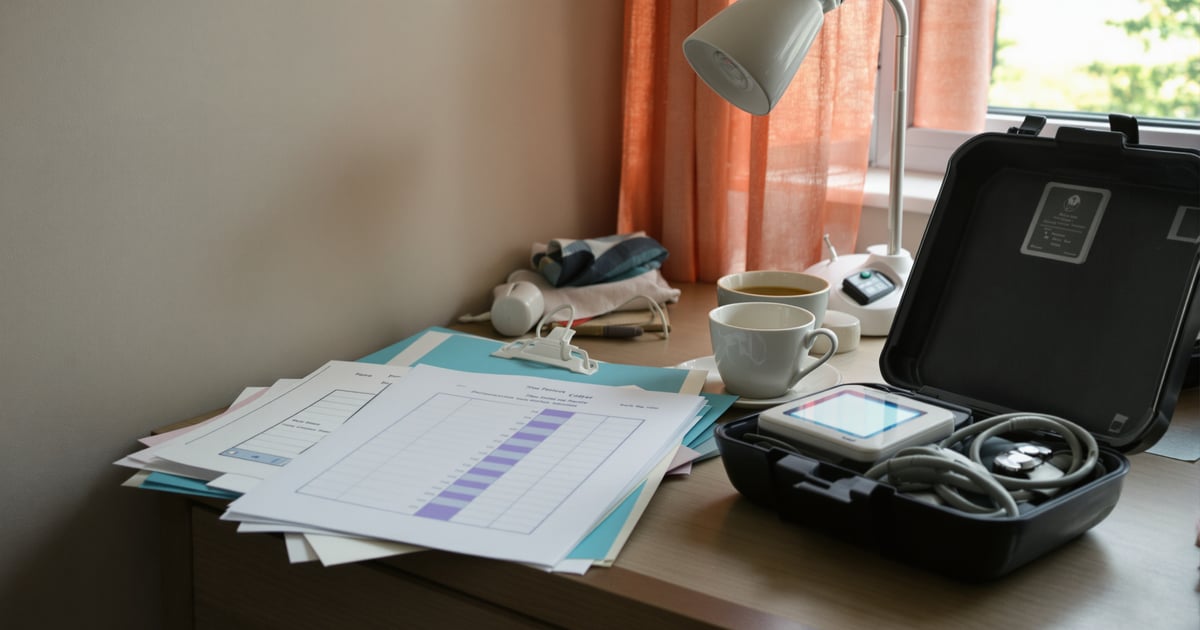
Documentation that holds up in an RPM review shows a clinician's order, patient consent, device data in the chart, and time records tied to a licensed human. Scrutiny from OIG and UPIC is good for patients and for programs doing it right. We make practices audit-ready, not audit-proof.
The point of remote patient monitoring is that a clinician sees a change in a patient before it becomes an emergency, and acts on it. When that happens, there should be a record in the chart that shows it happened. That record is what protects the patient's continuity of care, and it is also what an auditor will ask you for.
For the C-suite, that is the bridge to revenue. RPM revenue can be meaningful for a practice, depending on panel size, patient mix, payer mix, and how many enrolled patients stay engaged. That same revenue is what draws attention from the Office of Inspector General (OIG) and Unified Program Integrity Contractors (UPICs). Revenue that can't be tied to documented care is the revenue at risk.
What the scrutiny is telling you
We read the attention on RPM billing as a signal, not a threat. Scrutiny is good for patients, and it is good for the companies doing it right. We say that plainly, and we publish how our documentation holds up. We also thank the whole field for moving remote care forward; that progress is why the oversight exists.
We won't predict what regulators will do next, and we don't give legal advice. Talk to your counsel about your specific exposure. What we can do is describe what a defensible record looks like from the clinical side.
What documentation actually holds up
- An order and a plan. A treating clinician ordered monitoring for a clinical reason, and the chart says so.
- Consent. Documented patient consent, retrievable by patient.
- Device data tied to the patient. Readings that are visible in the chart, not locked in a vendor portal. True EHR integration matters here, and it is why we integrate and partner across the EHR ecosystem (Elation Health preferred partner; listed on the athenahealth Marketplace; partners with NextGen, TriZetto and Hippocratic AI).
- Time you can account for. Documented minutes, by a named licensed person, on a specific date, with what was done.
- An accountable human. Technology can give clinicians more time with patients. A licensed human is accountable for every patient contact and every claim.
Compliance is part of the product
We are HIPAA compliant and SOC 2 Type II certified.
Those are the floor, not the finish line. Compliance, to us, means documented time and evidence in the chart. We don't make anyone audit-proof. We make them audit-ready.
Device and billing questions your board should ask
Ask where the devices come from and who handles them. Our devices are FDA-cleared cellular Tenovi devices, pre-configured, with no WiFi, smartphone or app required, and the first device and consumables included. Fewer moving parts for the patient mean fewer gaps in the data you may someday need to produce.
Ask about billing alignment too. Our CPT guarantee is simple: you are invoiced only for codes you bill. Read the terms for any vendor, including device purchase and discharge fees, so you know what is in the contract.
Where we stand on the open rulemaking
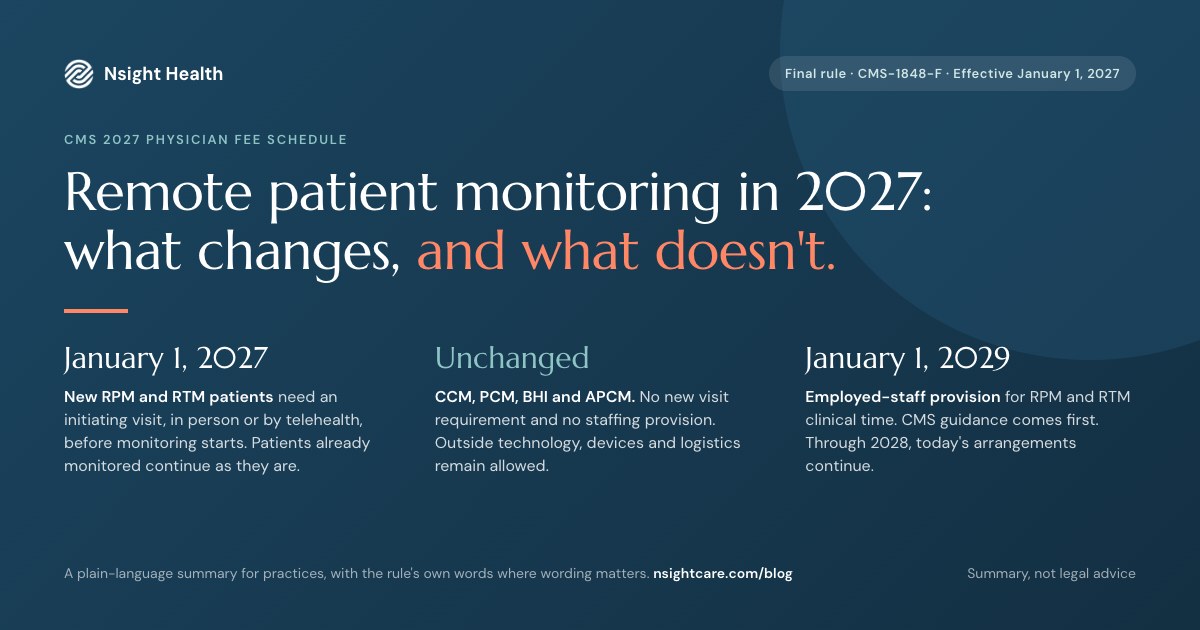
We filed a formal comment on CMS-1848-P asking CMS to withdraw the third-party staffing restriction, protect patients already enrolled, and aim enforcement at fraud. We will comply with whatever is finalized. We have also offered CMS and its competitors an open data-sharing table on RPM outcomes, because better data helps everyone.
What to bring to your next board meeting
- A one-page map of who is accountable for each RPM patient contact and claim.
- A sample, with identifiers removed, of the chart evidence for one claim from order to billing.
- The vendor's security attestations and your own policy for retrieving time records on request.
- A revenue view as a range, depending on enrolled panel, engagement and payer mix, never a single promised number.
Questions we hear
What does an auditor look for first in an RPM claim?
The order, consent, device data tied to the patient, and time records. If any of those can't be pulled quickly, the claim is exposed.
Can a vendor make a practice audit-proof?
No. We make practices audit-ready: documented time, evidence in the chart, and a licensed human accountable for each contact and claim.
For more on how we think about this, see our other posts at the Nsight Health blog, and our compliance and documentation archive.
Draft for review. This article is general information, not legal or clinical advice.