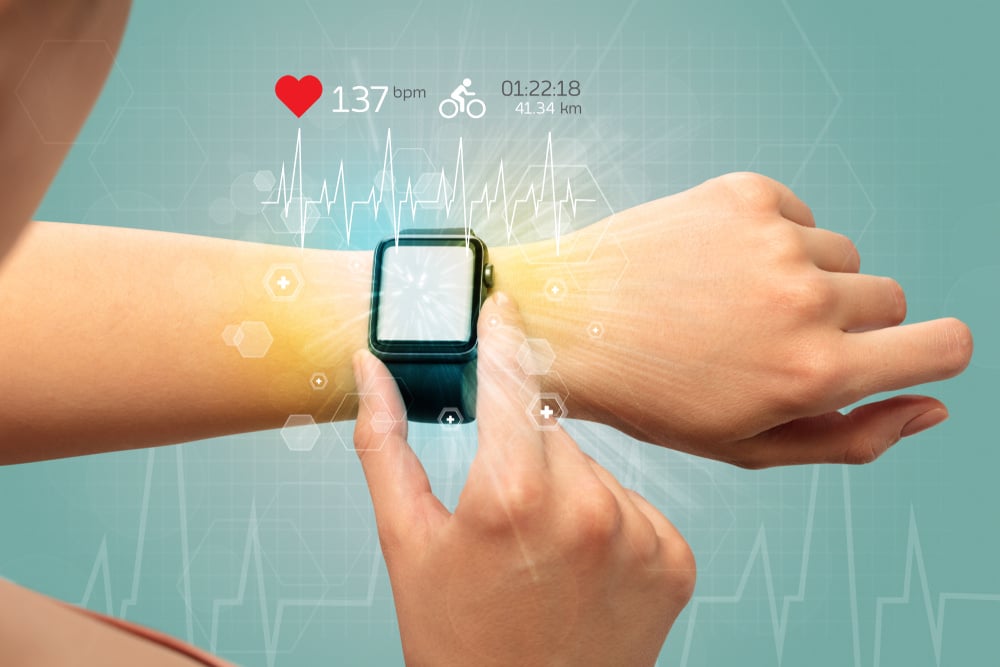
Americans today are increasingly invested in monitoring and engaging with their health metrics. From Fitbit to Apple Watch to Oura Ring, people are tracking their heart rate, activity levels, sleeping patterns, and more. A 2021 Deloitte study predicted that 440 million consumer health and wellness wearable devices would ship in 2024, but according to Market.us, wearables surpassed 500 million in 2023, and growth in 2024 is expected to exceed 550 million.
For the roughly 130,000 Americans who suffer from chronic illness, wearable devices are helping them manage their conditions. In conjunction with remote patient monitoring (RPM), wearable devices are revolutionizing healthcare by empowering patients to proactively participate in their treatment, lowering the overall cost, reducing the strain on resources, and improving outcomes.
Key Takeaways
- Wearable devices paired with RPM let patients actively participate in their care.
- Wearables continuously capture health data and feed it to the care team.
- They can lower cost and reduce strain on resources, with some adoption challenges to manage.
What are Wearable Devices in Remote Patient Monitoring?
RPM-compatible wearable devices are exactly what they sound like; medical-grade tools that track vital health metrics and are affixed to or worn on the body. “Medical grade” is the operative term and an important distinction. Rigorous testing and certification processes that ensure accuracy, reliability, and regulatory compliance set medical-great wearables apart from general consumer-grade personal wellness trackers. The United States Food and Drug Administration (FDA) reviews and approves devices intended for medical use, including clinical validation. Also, from a security standpoint, medical-grade devices used with RPM must comply with the Health Insurance Portability and Accountability Act (HIPAA), which isn’t necessarily true of consumer-grade personal devices. Finally, while apps for personal devices are rapidly advancing and increasing in accuracy to meet medical grade standards, not all integrate with RPM healthcare systems and electronic health records (EHR), meaning a patient will not experience the benefits of RPM. Here are some examples of wearable medical-grade devices that track biometrics for use with RPM.
- Smart patch and sticker wearables: Allow continuous, non-invasive monitoring of heart rate, glucose, and blood pressure levels by adhering to the skin and securely transmitting data to a healthcare team for analysis. They usually serve one function.
- Smartwatches: Some smartwatch brands have a standard software development kit (SDK) that integrates with RPM applications. Capabilities vary, with some multi-use and capable of tracking numerous biometrics. Others, like Omron HeartGuide, specifically monitor vitals associated with one condition, in this case, blood pressure, as an indicator of heart health.
- Smart rings: Smart rings can measure many of the same vitals that watches do, including heart rate, body temperature, sleep patterns, and more. Like smartwatches, not all rings are approved, medical-grade devices. However, Happy Ring recently obtained FDA approval and is intended for use with RPM systems. The ring monitors physiologic parameters, including acceleration/movement, electrodermal activity, blood oxygen saturation, pulse rate, and peripheral skin temperature. The ring transmits data via a mobile app, where it is stored, analyzed, and accessible by healthcare professionals.
Features of Wearable Devices in RPM
Medical-grade wearable devices continuously capture real-time health information with striking accuracy, which allows a patient’s clinical team to make informed decisions regarding their treatment plan. Here are some other main features of RPM.
- Data connectivity and integration: Most wearables sync with RPM platforms using Bluetooth, Wi-Fi, or cellular networks to transmit readings. The most comprehensive systems also integrate with EHRs, which allows for seamless collection, organization, and storage of sensitive patient data.
- Customizable alerts: Many wearable devices have a programmable feature that sends alerts if specific thresholds are crossed, for example, a blood pressure spike or a dangerous dip in blood oxygen levels. This ensures that the patient and their care team are aware of the changes and can promptly address them.
- User-friendly interfaces: Wearables are accessible, intuitive, and easy to use. Their dashboards and interfaces often provide immediate insights. Patients can track and follow their health trends and understand the triggers that can affect them.
How Wearables Work with RPM
Built-in sensors allow wearable devices to collect health data, using methods like photoplethysmography (PPG) to detect changes in blood circulation to monitor heart rate, for example. The information is then transmitted to an RPM platform, where analysis occurs, often leveraging artificial intelligence (AI). Alerts prompt intervention when readings fall outside of normal or safe parameters. This may include medical instructions, lifestyle changes, or medication adjustments. Here is an overview of the RPM workflow using wearable technology.
- Data collection
- Information transmission
- Analysis
- Intervention
The Impact of Wearable Devices in RPM
Wearables used with RPM improve healthcare quality and delivery in several ways.
- Increased engagement: Wearables allow users to view their metrics, track their health trends, and intimately understand how lifestyle patterns affect overall wellness.
- Improved chronic care management: Wearables and RPM empower patients to participate in their care from anywhere, with fewer office visits. Enhanced communication through RPM leads to actionable insights for better health management and improved outcomes.
- Reduced hospitalizations: RPM offers a proactive approach to healthcare, alerting patients and providers when something is amiss and addressing patient issues before they escalate. Statistics show RPM can reduce hospital readmissions by more than 38%.
- Enhanced medication adherence: Wearables provide real-time feedback that helps patients understand the health consequences of not following their treatment plans.
- Lower medical costs: By reducing the number of in-office visits and hospitalizations, providing opportunities for patients to give and receive feedback, improving medication adherence, and applying a proactive approach, RPM can relieve the burden on the healthcare system and affiliated resources, reducing overall costs for patients and providers.
Challenges and Considerations of Wearables and RPM
The assessments of RPM and wearables are mostly positive, but there are some opportunities for improvement and challenges to overcome.
- Data privacy: Many devices today have the technology to record and track health metrics, but they lack the vital security for HIPAA compliance and use with RPM systems.
- Accessibility: The cost of wearables can limit their adoption, particularly within underserved populations.
- Accuracy: While many consumer-grade devices can read multiple biometrics with some accuracy, medical-grade devices require much more precision, especially for monitoring chronic illness. This underscores the need to use certified medical-grade devices specifically designed for use with RPM systems.
Wearables improve the quality of care for the masses, whether for maintaining general wellness, monitoring recovery, or managing a chronic condition. In the future, the lines between consumer and medical-grade devices will continue to blur with technological advancements and AI and machine learning integrations further advancing health tools and making them more accessible. When used with RPM, wearables can be a powerful tool in bridging a connection between patients and providers. To learn more about wearables and RPM with Nsight Health, click HERE to schedule a demo today.
To learn more about RPM devices and CCM through Nsight, click HERE to schedule a demo today. Whether you are a patient or provider looking to learn more about RPM, we would love to hear from you.