
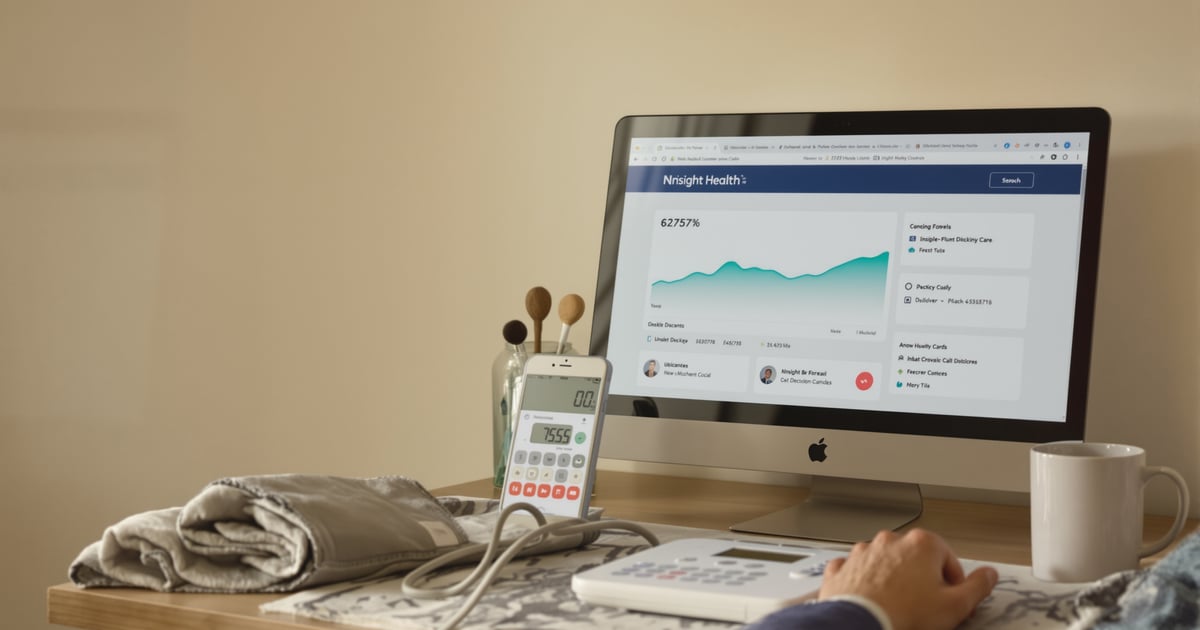
In nephrology and cardiology, remote readings matter most where the trend between visits changes a decision: medication, volume management, or an earlier visit. The test is simple: if a reading would not change what a clinician does, it is noise. We explain how to apply that test and what has to be in place for readings to be usable and documented.
The reason to send a heart or kidney patient home with a monitor is simple: a reading taken on Tuesday can change what you do on Wednesday, instead of waiting for the next appointment to find out the trend turned. When it works, the clinician sees the change early, the patient avoids a harder conversation later, and your waiting room holds the people who actually need to be there.
Revenue comes second. Programs like this can support a practice financially, depending on your panel, your payer mix, and the codes you bill and document. We would rather you start with the clinical question, because the programs that answer it well are also the ones that hold up under review.
The test: does the reading change a decision?
Remote care in any specialty can drown a clinician in numbers. Our test for a condition is blunt. If a reading would not change what you do before the next visit, it is noise, and noise adds to cognitive overload. Cardiology and nephrology pass that test more often than most fields, because both manage conditions where small shifts compound quietly between appointments.
Cardiology: where the trend is the signal
In heart failure and hypertension, a single office reading is a snapshot taken after a drive, a waiting room, and a clipboard. Readings from home show you the pattern: whether a regimen is holding, whether a change is working, whether someone needs a call this week instead of next quarter. You set the thresholds and the response. The program's job is to put the right reading in front of the right clinician, and to prioritize who needs care first.
Nephrology: blood pressure and volume live between visits
In chronic kidney disease, blood pressure control and fluid status shape the plan, and both move on their own schedule, not yours. A home trend can inform a medication review, a conversation about volume, or an earlier visit. A steady trend does the opposite: it supports keeping a stable patient out of a crowded schedule. Either way, the reading is useful because someone is positioned to act on it.
What makes a reading usable
A reading only changes a decision if it arrives reliably and lands in the chart. Our patients use FDA-cleared cellular Tenovi devices, pre-configured, with no WiFi, smartphone or app required, and the first device and consumables included. That matters most for older patients and for anyone whose home setup is the barrier. If the device is hard to use, you do not get a trend, you get gaps.
Documentation is the other half. Compliance is part of the product for us: documented time and evidence in the chart. We are HIPAA compliant and SOC 2 Type II certified. We do not make anyone audit-proof. We make you audit-ready. Scrutiny of RPM billing is good for patients and for the companies doing it right.
Who is accountable
A licensed human is accountable for every patient contact and every claim. AI gives our clinicians more time with patients, not less. Our team includes nearly 200 clinical professionals, and that is the point of a fully managed program: we do not just send devices and hope.
Where to start
Pick one condition, one panel, and one decision you want to make earlier. Write down what you will do when the number moves, and who will do it. If patients hesitate to join, our piece on why eligible patients say no to RPM, and what to do covers the conversation. More on the rules and the care models behind them is on the Nsight Health blog.
To the broader remote care field: thank you for moving this work forward. The more we all focus on readings that change decisions, the better it is for patients.